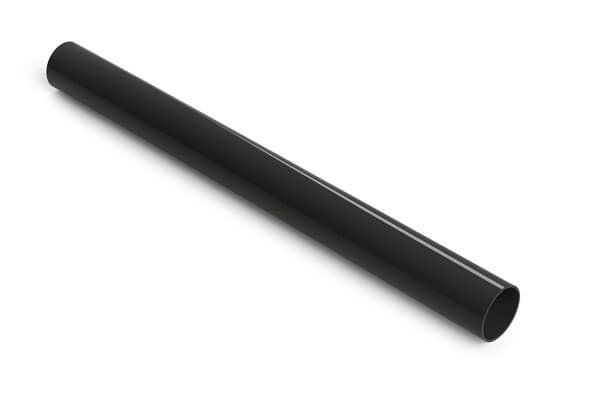
Quick Summary: A damaged bending rubber lets fluid into the bending section. This causes expensive sensor damage. This guide shows you how to spot a failing rubber, which material to choose, and how to match the right size to your scope model.
What Is a Bending Rubber?
The bending rubber is the outer sleeve that covers the bending section of a flexible endoscope. It sits just above the distal tip.
Its job is to seal the metal ring stack inside. Without it, water and disinfectants enter the bending section during procedures and reprocessing. This leads to corrosion, fluid ingress past the optical section, and sensor failure.
The rubber must be thin enough to flex freely. This makes it one of the most vulnerable parts on the scope. It is not a structural part — it is a sealing part. Replace it before it fails completely.
To understand how the bending section works as a whole, see our guide to endoscope bending section basics.
Signs That Your Bending Rubber Needs Replacement
Check the bending rubber visually before every reprocessing cycle. Look for these signs:
Cracks or tears. Small cuts appear first near the proximal edge of the bending section. These often come from biopsy forceps or from squeezing too hard during cleaning.
Surface swelling or bubbling. Some disinfectant chemicals degrade rubber over time. A swollen or soft surface means the material has absorbed chemicals. The seal is already compromised.
Pinhole damage. Tiny holes are hard to see but will cause a failed leak test. If your scope fails a leak test at the bending section and you cannot see an obvious crack, check for pinholes under bright light.
Fluid found inside during leak test. If the scope leaks at the bending area during a pressure test, the rubber seal has failed. Do not continue using the scope. See our endoscope troubleshooting guide for how to isolate the leak source.
Material Types: Viton vs. Silicone vs. Standard Rubber
Not all bending rubbers are the same material. The material you need depends on your disinfection chemicals and how often the scope is used.
| Material | Chemical Resistance | Flexibility | Common Use |
|---|---|---|---|
| Viton (FKM) | Excellent | Good | High-disinfectant environments, peracetic acid compatible |
| Silicone | Moderate | Very good | Low-chemical environments, older scope designs |
| Standard rubber (EPDM/NBR) | Basic | Good | General use, lower-cost applications |
Viton (FKM) is a fluoroelastomer. It resists peracetic acid, glutaraldehyde, and other strong disinfectants used in endoscopy. If your facility uses peracetic acid-based reprocessing systems (such as Steris or Medivators), Viton is the correct choice. It holds up better than silicone or standard rubber under repeated chemical exposure.
Silicone is very flexible and biocompatible. It is used in some older Olympus and Pentax scope designs. Silicone is softer than Viton but less resistant to strong disinfectants. It is a good choice where chemical exposure is lower.
Standard rubber (EPDM or NBR blends) is the baseline material. It costs less but degrades faster in high-disinfectant environments. It is suitable for scopes with lower usage volume or when Viton is not available for a specific size.
If you are not sure which disinfectant your facility uses, check with your reprocessing team before ordering. Using the wrong material will shorten the life of the replacement part.
How to Select the Right Replacement
Bending rubbers are not universal parts. You must match three things: outer diameter, length, and scope model.
Step 1: Record the exact scope model number. Find the model number on the ID plate near the control handle. Write down the full identifier, including all letter suffixes. For example, a GIF-H190 and a GIF-HQ190 use different bending rubbers.
Step 2: Measure or look up the outer diameter (OD). The OD of the bending rubber must match the outer diameter of the bending section it covers. A rubber that is too large will not seal correctly. One that is too small will tear during installation.
Step 3: Check the length. The rubber must cover the full length of the ring stack. Too short and the proximal edge is exposed. Too long and the rubber folds or bunches.
Step 4: Confirm the material. Tell your supplier which reprocessing chemicals you use, and they can recommend the right material grade.
When in doubt, provide the scope model number and let the supplier match the part. This avoids ordering errors.
Key Specs to Check Before Ordering
These are the three numbers you must have before placing an order:
Outer diameter (OD) — measured in millimeters. Common sizes range from approximately 7 mm for slim scopes to 13.4 mm for therapeutic gastroscopes. Our bending rubbers catalog lists parts by OD.
Length — measured in millimeters. Typical lengths range from 75 mm to 200 mm depending on the scope type.
Wall thickness — thinner walls flex more easily but seal a smaller gap. Some suppliers list this spec, others do not. If the bending section has tight tolerances, confirm the thickness.
Compatible Brands
Endotec supplies OEM-compatible bending rubbers for:
- Olympus — gastroscopes, colonoscopes, bronchoscopes, duodenoscopes
- Pentax (Hoya) — GI endoscopes and bronchoscopes
- Fujinon (Fujifilm) — EG and EC series endoscopes
If your scope brand or model is not listed on the product page, contact us with the model number. We can check compatibility from our parts database.
Frequently Asked Questions
How often should a bending rubber be replaced?
There is no fixed interval. Replace it when you see visible damage or when the scope fails a leak test at the bending section. High-volume scopes may need replacement more often than low-volume ones. Inspect the rubber before every reprocessing cycle.
Can I use any bending rubber as long as the OD matches?
No. The OD is important, but the length and material also matter. Using a rubber that is the right diameter but the wrong length can leave part of the bending section unsealed. Using the wrong material in a high-disinfectant environment will cause early failure.
Do I need to send the scope to a repair center to replace the bending rubber?
Not always. Bending rubber replacement is one of the simpler in-house repairs for trained biomedical engineers. The scope does not need to be fully disassembled. However, a leak test is required after installation to confirm the seal is correct. If your team is not trained for this procedure, a repair center is the safer option.
What happens if I keep using a scope with a damaged bending rubber?
Fluid enters the bending section during the procedure or reprocessing. Over time, this reaches the optical section and image sensor. Sensor damage is expensive — repair often costs more than several bending rubber replacements. Replace a damaged rubber as soon as you find it.
Need Help Matching a Part?
Send us your scope model number and we will confirm the correct bending rubber size and material.
Browse our bending rubbers catalog or contact our team for a quote. We ship globally and can confirm compatibility before you order.
