Quick Summary: Every flexible endoscope uses three valve types — air/water, suction, and biopsy. They are small, cheap parts that cause big problems when they fail. A stuck suction valve can ruin a procedure. A leaking air/water valve can send fluid into the wrong channel. This guide covers how each valve works, the signs that one is failing, and how to get the right replacement.
Table of Contents
- The Three Valve Types
- Air/Water Valve
- Suction Valve
- Biopsy Valve (Instrument Channel Valve)
- Signs a Valve Needs Replacement
- How to Choose the Right Replacement Valve
- FAQ
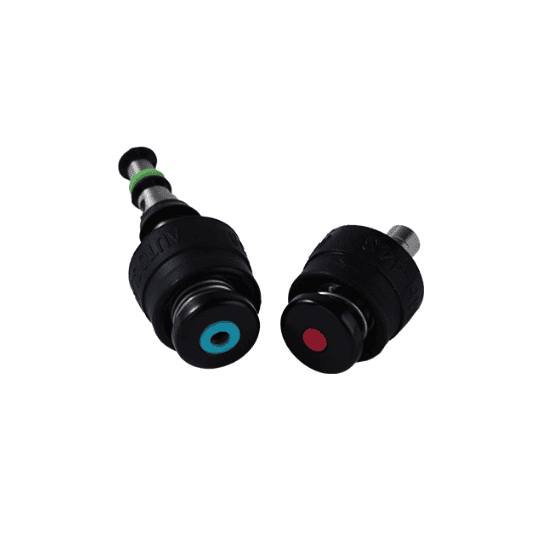
The Three Valve Types
A flexible endoscope has three valves on its control body. Each controls a different function:
| Valve | Location | Function |
|---|---|---|
| Air/water valve | Control body button (usually blue cap) | Delivers air to inflate the body cavity; delivers water to clean the lens |
| Suction valve | Control body button (next to air/water) | Applies vacuum to remove fluid and debris |
| Biopsy valve | Top of instrument channel port | Seals the channel opening; prevents backflow during suction |
All three are consumable parts. They wear out with normal use and must be replaced regularly. Compared to major components like insertion tubes or bending sections, valves are inexpensive — but a failed valve can force you to cancel a procedure or damage the scope.
Air/Water Valve
How It Works
The air/water valve is a two-position button:
- Press halfway down: air flows through the air channel to inflate the body cavity
- Press all the way down: water flows through the water channel to rinse the distal lens
- Release: both channels are sealed
Inside the valve body, rubber O-rings and a spring create the seal between positions. The valve sits in a metal cylinder on the control body.
What Goes Wrong
Stuck or stiff button. Dried debris or damaged O-rings cause the button to stick. The operator loses fine control over insufflation.
Air leak when the button is released. Worn seals allow air to escape continuously. The patient’s body cavity stays inflated even when the operator is not pressing the button. This is uncomfortable for the patient and can obscure the view.
Water dripping from the nozzle. A damaged seal between the air and water positions lets water leak into the air channel. Water drips from the distal nozzle when the operator wants air, not water.
Cross-channel contamination. In severe cases, a worn valve can allow fluid from one channel to enter another. This is a reprocessing concern — channels that should be isolated are now connected.
Replacement Timing
Replace the air/water valve when:
– The button feels sticky or does not spring back smoothly
– Air or water flows at the wrong time
– You see moisture in the air channel
– Visual inspection shows cracked or swollen O-rings
Most facilities replace air/water valves every 6–12 months as preventive maintenance, or more often in high-volume settings.
Suction Valve
How It Works
The suction valve connects the endoscope’s instrument channel to a vacuum source:
- Button released (up): the channel is sealed — no suction
- Button pressed (down): the channel opens to the vacuum line, pulling fluid and debris out through the biopsy channel
- Finger hole covered: when the operator covers the hole on top of the button, suction is redirected through the channel
The valve body contains a rubber piston with O-rings that slide inside a cylinder. The seal quality determines how strong and responsive the suction is.
What Goes Wrong
Weak suction. Worn O-rings let air leak into the vacuum line. The suction feels “soft” — it takes longer to clear fluid from the field of view.
Continuous suction when the button is released. A stuck piston or collapsed O-ring keeps the vacuum channel open. The scope continuously pulls suction, which can collapse tissue against the distal tip.
No suction at all. The piston is jammed or the channel is blocked. Before replacing the valve, check that the biopsy channel tube itself is not clogged. Run a cleaning brush through the channel first.
Suction noise but no flow. The vacuum is working, but debris has built up between the piston and cylinder wall. The valve needs cleaning or replacement.
Replacement Timing
Replace the suction valve when:
– Suction strength drops noticeably
– The button does not move freely
– O-rings are visibly cracked or compressed flat
– Cleaning does not restore performance
High-volume endoscopy centers that run 15+ procedures per day often replace suction valves every 3–6 months.
Biopsy Valve
How It Works
The biopsy valve sits at the entrance of the instrument channel port on the control body. It is a small rubber cap with a slit or cross-cut opening. Its jobs:
- Seal the channel when no instrument is inserted — this is critical for suction to work, because suction only works in a sealed system
- Allow instruments to pass through — biopsy forceps, snares, brushes, and other tools push through the slit
- Prevent backflow — keeps fluid from splashing back out of the channel during suction
What Goes Wrong
Loss of suction. This is the most common symptom of a worn biopsy valve. The slit no longer seals fully, so air leaks into the channel and suction drops. Operators often blame the suction valve first, but the biopsy valve is the cause about half the time.
Fluid leaks from the channel port. During irrigation or suction, fluid sprays out of the instrument channel opening. This is a contamination risk for the operator.
Difficulty inserting instruments. The rubber hardens over time and repeated use. The slit becomes stiff, making it hard to pass biopsy forceps or brushes. Forcing instruments through a stiff valve can damage both the valve and the instrument.
Torn or missing valve. The cross-cut slit can tear, especially after repeated use with larger instruments. A torn valve cannot seal at all.
Replacement Timing
Biopsy valves are single-use or very short-life parts. Guidelines vary by manufacturer:
- Olympus: recommends single-use disposable biopsy valves (MAJ-209 series)
- Pentax and Fujinon: similar recommendations for frequent replacement
- Many facilities reuse valves for a limited number of procedures, but replace them at the first sign of seal loss
If suction performance drops, check the biopsy valve first. It is the cheapest and easiest part to replace — a new valve costs a few dollars and takes 5 seconds to install.
Signs a Valve Needs Replacement
Here is a quick reference table:
| Symptom | Check First | Check Second |
|---|---|---|
| Weak suction | Biopsy valve seal | Suction valve O-rings |
| No suction at all | Channel blockage (run brush) | Suction valve piston |
| Air leak (continuous insufflation) | Air/water valve O-rings | Leak test the scope |
| Water when expecting air | Air/water valve seals | Water channel blockage |
| Fluid leaking from channel port | Biopsy valve (torn slit) | Channel tube damage |
| Stiff button | Clean the cylinder first | Replace the valve if cleaning fails |
Pro Tip: When troubleshooting, start with the cheapest part. Biopsy valves cost a few dollars. Suction and air/water valves cost $10–$30. Replacing all three valves takes under 5 minutes and rules out the most common problems before you start investigating expensive components like coil pipe assemblies or flex circuit boards.
How to Choose the Right Replacement Valve
1. Match the Scope Model
Valves are not universal. Each manufacturer — and often each scope series — uses valves with different dimensions, O-ring sizes, and spring tensions.
| Brand | Air/Water Valve Examples | Suction Valve Examples |
|---|---|---|
| Olympus | MH-438 (air/water) | MH-443 (suction) |
| Pentax | OF-120 (air/water) | OF-180 (suction) |
| Fujinon | AW-500/B (air/water) | SB-500/B (suction) |
Always order by scope model number, not just by brand. A valve that fits a GIF-H190 may not fit a CF-H190L.
2. OEM vs Compatible
OEM valves come from the scope manufacturer. Compatible valves are made by third-party suppliers to the same specifications.
The key difference is price: compatible valves typically cost 40–60% less than OEM. For consumable parts that you replace every few months, the savings add up fast.
What to check when buying compatible valves:
– Dimensional accuracy — O-ring diameter and cylinder bore must match within tight tolerances
– Material quality — medical-grade silicone for O-rings, corrosion-resistant metal for cylinders
– Reprocessing compatibility — the valve must withstand your standard chemical disinfection process
3. Buy in Bulk
Valves are consumable. You will go through many of them. Ordering in bulk — 10, 20, or 50 at a time — reduces per-unit cost and ensures you always have replacements on hand. A missing valve should never be the reason a scope sits idle.
Frequently Asked Questions
How often should endoscope valves be replaced?
It depends on the valve type and usage volume. Biopsy valves: after every procedure or every few procedures. Air/water and suction valves: every 3–12 months for most facilities, or sooner if performance drops. High-volume centers (15+ procedures/day) replace more often.
Can I reuse single-use biopsy valves?
Manufacturers label them single-use for a reason — the thin rubber slit degrades quickly. Some facilities do reuse them for a limited number of procedures after reprocessing, but seal performance drops with each cycle. If suction is weak, the biopsy valve is almost always the first thing to check.
Why does suction get weak even with new valves?
If new valves do not fix weak suction, the problem is likely in the biopsy channel tube itself. Built-up protein deposits or a partially collapsed tube restricts flow. Run a channel cleaning brush through the full length. If that does not help, the tube may need replacement.
Are compatible valves safe to use?
Yes, as long as they meet dimensional and material specifications. Valves are simple mechanical parts — an O-ring in a cylinder. The key is that the dimensions match your scope model exactly. Request a spec sheet or dimensional drawing from the supplier before ordering.
Can a faulty valve damage the endoscope?
Directly, no — a worn valve will not break anything. But indirectly, yes. A leaking air/water valve can push fluid into unintended areas. A failed biopsy valve seal can reduce suction, causing operators to use more force or repeat procedures. And any valve problem can lead to incomplete reprocessing, which is both a patient safety issue and a source of long-term scope damage.
Valves are the most-replaced parts on any endoscope. Keep a stock of the right ones for your scope models, replace them on schedule, and check them first whenever performance drops.
Need valves for your endoscopes? Contact Endotec with your scope model numbers. We carry compatible air/water valves, suction valves, and biopsy valves for Olympus, Pentax, and Fujinon scopes.
Internal Links: 10
– /product-category/insertion-tubes/
– /product-category/bending-section/
– /product-category/biopsy-channels/ (×3)
– /product-category/coil-pipe/
– /product-category/flex-circuit-board/
– /endoscope-leak-testing-guide/
– /contact-us/
